
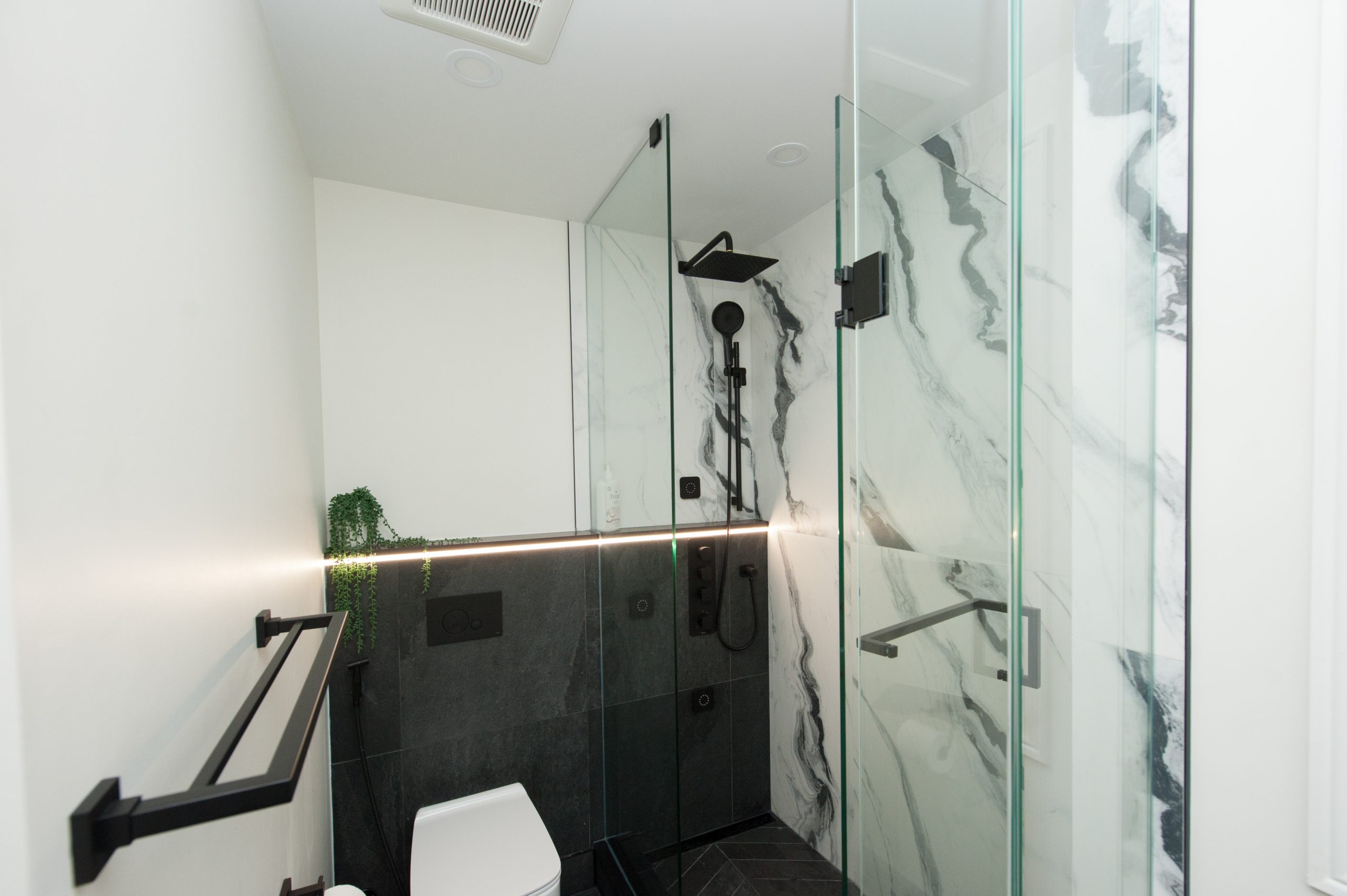
Quick Answer
A steam shower is a fully sealed shower with a steam generator that turns it into a small steam room. As general GTA pricing, a custom steam shower costs roughly $12,000 to $25,000 on top of a standard bathroom renovation, while prefab units start around $4,000. In addition, steam shower installation needs a vapour-proof enclosure up to the ceiling, a steam-tight glass door and a dedicated 240V circuit.
Quick Takeaways
- A steam shower works as a regular shower too, so it adds a home spa without taking up extra floor space.
- The enclosure must be sealed from floor to ceiling, with waterproofing on the walls, floor and ceiling.
- Turning an existing shower into a steam shower usually means opening the walls and ceiling, so it is best planned as part of a full renovation.
- For most steam shower installations, the generator runs on a dedicated 240V circuit, so older homes may need a panel upgrade first.
- A 20-minute steam session uses about 4 litres of water or less, far less than a typical 10-minute shower.
- Check with your doctor first if you are pregnant or have heart disease, blood pressure concerns or another condition that makes you sensitive to heat.
Custom steam showers are a feature of many spa-style primary ensuites in the GTA. They turn an ordinary shower into a private home steam room, and on a cold Ontario evening, that is hard to argue with.
However, a steam system is not simply a shower with a different head. Steam gets into places water never reaches, so the enclosure, the waterproofing, the ceiling and the electrical all have to be built for it. Get those details right and it will last for years. Get them wrong, on the other hand, and moisture ends up inside your walls.
This guide explains how the system works and how it compares to a sauna. It also covers what steam shower installation involves, the steam shower requirements for power and space, and what it costs in 2026. For a full ensuite plan and quote, see our bathroom renovation services across the GTA.
Jump To a Section
What Is a Steam Shower and How Does It Work?
In short, this setup combines a normal shower with four extra parts. Together, they turn the enclosure into a small steam room whenever you want one.
The Steam Generator
This compact unit heats water into steam. Because it sits outside the shower, usually in a nearby closet, vanity or heated attic space, it stays accessible for service.
The Steam Head
Steam enters the shower through a small outlet low on the wall. In most cases, manufacturers recommend placing it 6 to 12 inches above the floor and away from where you sit.
The Control Panel
A waterproof panel inside the shower sets the temperature and session time. It is typically mounted 4 to 5 feet above the floor, so you can reach it from the bench.
The Sealed Enclosure
Finally, the enclosure keeps the steam in. Glass runs to the ceiling, the door seals tightly, and the walls and ceiling are waterproofed so vapour cannot reach the framing.
Steam Shower vs Sauna: Which Suits Your Home?
Both deliver heat, but in very different ways. For example, a steam room typically runs around 50°C at close to 100% humidity. A traditional sauna, on the other hand, runs about 66 to 85°C with low humidity. If a sauna is on your list too, our guide to infrared vs traditional saunas compares both types for home use.
Even so, at home the control panel lets you set the temperature and session length you are comfortable with.
Is a Steam Shower Worth It?
For the right household, yes. It suits you best if you already plan a primary ensuite renovation and would genuinely use steam a few times a week. Your walk-in shower should also be big enough for a bench. In that case, much of the steam shower cost (tile, glass, plumbing, waterproofing) is already in the budget, so steam becomes an upgrade rather than a separate project.
On the other hand, it makes less sense in a small secondary bathroom, a shower nobody lingers in, or a project where the electrical panel has no spare capacity. Likewise, if you only want occasional heat therapy, a gym or spa membership may cost far less.
Planning a primary ensuite anyway? Our Bathroom Renovation Cost Guide shows what the rest of the room typically costs, so you can see the steam upgrade in context.
What a Steam Shower Installation Involves
Steam is far more searching than shower spray. As a result, every surface and every gap in the enclosure has to be built with vapour in mind. With that in mind, these five parts matter most in any steam shower installation.
Vapour-Proof Waterproofing
A standard shower only needs waterproofing where water lands. A steam enclosure, however, needs a membrane on the walls, the floor and the ceiling. That membrane should be rated for steam showers, so it acts as both waterproofing and a vapour retarder. In addition, every seam, corner and penetration, including the steam inlet, has to be sealed.
A Lower, Sloped Ceiling
Generator manufacturers generally describe an 8-foot ceiling as ideal, since higher ceilings mean more volume to heat. In addition, many waterproofing guides call for a sloped ceiling so condensation runs down the walls instead of dripping on you. Manufacturers differ on whether a slope is essential for short home sessions, so your installer should follow the generator maker’s instructions.
Full-Height Glass and a Steam-Tight Door
Glass that stops short of the ceiling lets steam escape into the bathroom. Instead, a steam enclosure uses glass to the ceiling with a sealed door. Many designs also add an operable transom panel above the door, which lets the enclosure air out after a session.
A Bench and the Right Drain
You will want to sit, so plan a bench at the framing stage. As a rough guide, aim for at least 15 inches deep and 18 inches high, built in or fold-down. A linear drain is a popular choice, since it works well with a single-slope floor.
A Generator Location That Works
The generator has to sit within the distance its manufacturer allows, which for some models is up to about 25 feet from the steam head. It also needs a drain connection and access for service, so a nearby closet or vanity is the usual spot.
Can You Convert an Existing Shower?
Rarely as a simple add-on. Most existing showers have no membrane on the ceiling, glass that stops short, and no room for a generator. Therefore, installing a steam shower in an existing bathroom usually means opening the walls and ceiling, which is why it is best planned as part of a full ensuite renovation.
Steam Shower Requirements: Electrical, Plumbing and Ventilation
Electrical. In most cases, residential steam generators run on 240V household power on a dedicated circuit. Depending on the generator, that often means a 40 to 60 amp circuit, and older homes may need a panel upgrade first. In Ontario, the new circuit also needs an ESA permit, which a licensed electrical contractor takes out. Our Kitchen and Bathroom Fixtures and Systems Guide covers bathroom circuits in more detail.
Condos. Many condo buildings supply 208V rather than 240V, so the generator must be rated for it. In addition, condo boards usually need to approve the work before it starts.
Plumbing. The generator also needs its own water supply and a drain line. Many units also have an automatic flush feature that clears minerals after each session, which helps in GTA areas with hard water.
Ventilation. Do not put an exhaust fan inside the steam enclosure, since it would pull the steam straight out. Instead, place a well-sized fan in the bathroom, ideally with a humidity sensor, and run it after each session. The Lighting and Ventilation Guide explains how to size it.
Pro Tip
Ask for an electrical panel check before you fall in love with a steam design, since the panel can change your steam shower installation cost. A 9 kW generator can draw around 60 amps on its own, so knowing your panel’s spare capacity early avoids a surprise upgrade halfway through the project.
What Size Steam Generator Do You Need?
Steam shower generator size depends on the volume of the enclosure. To find yours, multiply length by width by height. For example, a 4 by 5 foot shower with an 8-foot ceiling holds 160 cubic feet.
Volume is only the starting point, though. Natural stone and tile absorb more heat than acrylic, so they need more power. Likewise, exterior walls, ceilings above 8 feet and large areas of glass all push the size up.
As a reference, one common 7.5 kW model is rated for up to about 250 cubic feet. Each manufacturer publishes its own sizing chart, so your installer should size from the exact model you choose. An undersized generator struggles to fill the space, while a correctly sized one heats it quickly and runs less.
Custom Build or Prefab Unit?
There are two ways to get a home steam room, and they suit very different projects.
Built into your bathroom with tile, glass and a hidden generator. Because it fits any size or shape, it matches the rest of the ensuite and adds the most value to the home. In return, it costs more and needs careful construction.
An all-in-one cabin with walls, door and generator included. As a result, it costs less and installs faster. However, it comes in set sizes, often looks like a product rather than part of the room, and still needs proper plumbing, drainage and a dedicated circuit.
How Much Does a Steam Shower Cost in the GTA?
Your steam shower installation cost depends on size, materials and the electrical work your home needs. As a general guide for GTA homeowners in 2026, here is what each part typically costs.
About $12,000 to $25,000 on top of a standard bathroom renovation. Larger enclosures with premium stone and extra features can reach $30,000 or more.
About $4,000 to $7,000 for entry-level units and $7,000 to $12,000 for mid-range models. However, plumbing and electrical work can add to the total.
About $1,000 to $2,500 for the residential unit itself, and over $3,000 for commercial-grade models. On a typical project, the generator is often around 20% of the total cost.
An ESA permit for the new circuit typically adds about $300 to $600, plus inspection fees. A panel upgrade, if needed, is extra.
Worth Knowing
The cost of a steam shower drops a lot when you add it during a primary ensuite renovation rather than later. The tile, glass, plumbing and waterproofing are already being done, so you only pay for the steam-specific upgrades rather than rebuilding a finished shower.
Running Costs, Water Use and Maintenance
Water. In fact, steam is surprisingly efficient. Manufacturer figures put a 20-minute steam session at about 4 litres of water or less. By comparison, a standard 10-minute shower uses around 95 litres.
Electricity. For example, a 7.5 kW generator running nonstop for 30 minutes, including warm-up, would use at most about 3.75 kWh. In practice, it cycles off once the room is hot, so actual use is lower. To estimate your cost, multiply that by the per-kWh rate on your hydro bill.
Maintenance. First, descale the generator as the manufacturer recommends, and more often if you have hard water. In addition, check the door seals and grout regularly, run the bathroom fan after each session, and leave the door or transom open so the enclosure dries out. Our Mould and Moisture Prevention Guide covers the drying habits that matter most.
Steam Shower Design Ideas for a Spa-Like Ensuite
Your steam enclosure should feel like a retreat, and these four choices make the biggest difference to how it looks and how it lasts.
Tile and Grout
Porcelain is a dependable choice for steam, since it absorbs very little moisture. Many installers also prefer epoxy grout, which resists moisture and staining better than standard cement grout.
Wet-Rated Lighting
Any light inside the enclosure must be rated for wet locations, typically IP65 or higher. Once that box is ticked, a dimmable recessed light or a soft LED strip under the bench creates a calm, spa-like feel.
Glass and Transom
Clear, frameless glass to the ceiling keeps the room bright and makes a large ensuite feel even bigger. Meanwhile, an operable transom adds ventilation without breaking the clean look.
Extras Worth Considering
In addition, many generators offer aromatherapy, built-in speakers or app control. Similarly, a heated bench or heated floor outside the shower adds comfort. Choose these early, though, since several need wiring before the walls close.
Pro Tip
Place the steam head on the opposite side of the enclosure from the bench and the control panel. That way, the hottest steam never blows directly onto your feet or legs while you sit.
Common Mistakes That Lead to Leaks and Mould
The most common steam shower installation mistake is treating the enclosure like a normal shower. For example, waterproofing only the wet zone, or leaving the ceiling unsealed, lets vapour reach the framing, where it causes rot and mould over time.
The second is glass that stops short of the ceiling, since even a small gap lets steam escape. As a result, the generator works harder and the bathroom fills with moisture.
The third is forgetting the electrical panel until late in the project. As noted above, a generator can need a large dedicated circuit, and finding out you need a panel upgrade after demolition delays everything.
Finally, many homeowners skip planning for permits. In Ontario, the new circuit needs an ESA permit, and some plumbing changes also need a municipal permit. Our Renovation Timeline and Permit Guide explains what applies in Ontario.
How Smart Renovations Builds Home Steam Rooms
We handle steam shower installation as part of primary ensuite renovations across the GTA. Here is what you can expect when you work with us.
See Spa Finishes in Person
Tile, stone, glass and fixtures are much easier to judge in person than on a screen. We work with GTA homeowners from two locations.
Richmond Hill Office 10815 Bathurst St, Unit 5 | Woodbridge Office 8A, 40 Innovation Dr |
Frequently Asked Questions
What is a steam shower?
A steam shower is a sealed shower enclosure with a steam generator, a steam head and a control panel. At the touch of a button, it fills with steam like a small steam room, and the rest of the time it works as a normal shower.
How much does a steam shower cost in Canada?
As general pricing, a custom steam shower costs roughly $12,000 to $25,000 on top of a standard bathroom renovation, with larger builds reaching $30,000 or more. By contrast, prefab units start around $4,000, and the generator alone typically costs $1,000 to $2,500.
Is a steam shower worth it?
It is worth it if you are already renovating a primary ensuite and would use steam regularly, since much of the cost is already in the budget. On the other hand, it makes less sense in a small secondary bathroom or if your electrical panel has no spare capacity.
Steam shower vs sauna: what is the difference?
A steam room runs around 50°C at close to 100% humidity, while a traditional sauna runs about 66 to 85°C with low humidity. Steam also fits inside your existing shower, whereas a sauna needs its own space.
Can you convert an existing shower into a steam shower?
Sometimes, but rarely as a simple add-on. The enclosure needs a vapour-proof membrane on the walls and ceiling, glass to the ceiling, a sealed door and a spot for the generator. In most cases, that means opening the walls and ceiling.
Can you install a steam shower in a condo?
Often, yes, with board approval. Many condo buildings supply 208V power rather than 240V, so the generator must be rated for it. You will also need a suitable spot for the generator and a dedicated circuit.
What size steam generator do I need?
Start with the enclosure volume: length times width times height. Then adjust for stone or tile walls, exterior walls and ceilings above 8 feet, which all need more power. Always size from the manufacturer’s chart for the exact model.
Do steam showers use a lot of water?
No. Manufacturer figures put a 20-minute steam session at about 4 litres of water or less, compared with roughly 95 litres for a standard 10-minute shower.
Do steam showers cause mould?
Not when they are built and used properly. In most cases, mould problems come from missing ceiling waterproofing, unsealed gaps or poor drying. A full vapour-proof membrane, a good bathroom fan and leaving the door open after use prevent most issues.
Does a steam shower need a sloped ceiling?
A slope helps condensation run down the walls instead of dripping on you, and many waterproofing guides call for it. Some generator makers consider it optional for short home sessions, so follow the instructions for your specific model.
What electrical does a steam shower need?
Most steam shower installations need a dedicated 240V circuit, often 40 to 60 amps depending on the generator. In Ontario, the work needs an ESA permit from a licensed electrical contractor, and older homes may need a panel upgrade.
Can you use a steam shower as a regular shower?
Yes. It has a normal shower valve and head, so you use it every day as usual. The steam only runs when you turn the generator on.
How long should you stay in a steam shower?
Start with short sessions, roughly 5 to 20 minutes, and drink plenty of water. If you are pregnant or have heart disease, high or low blood pressure, epilepsy or another heat-sensitive condition, talk to your doctor before using one.
Ready to Add Steam to Your Ensuite?
We design and build custom steam showers with a free 3D design, full membrane waterproofing, permits handled and a 1-year warranty.
About Smart Renovations
Smart Renovations is a GTA renovation company founded by Tina Wu, who began her career in kitchen and bathroom cabinetry manufacturing. That hands-on background still shapes how we plan materials and layouts today. Since then, we have completed over 1,000 projects and earned eight service excellence awards in a row, from 2019 to 2026. Today, more than half of our new projects come from referrals.
- Fully licensed and insured, with $5 million in general liability coverage
- WSIB certified, with a licensed electrician on staff
- A 1-year labour warranty on every project
- Offices in Richmond Hill and Woodbridge, serving the Greater Toronto Area
Want to know who is behind the work? Read Tina Wu’s story.