
Are you tired of staring at sterile, lifeless kitchen walls? Imagine stepping into your kitchen and feeling instantly refreshed, surrounded by lush greenery and natural textures. That’s the magic of biophilic kitchen design—a trend that’s not just beautiful but also benefits your well-being. Let’s explore how you can transform your kitchen into a nature-inspired oasis that nurtures both body and soul.
What is Biophilic Kitchen Design?
Biophilic design isn’t just a fancy term – it’s about creating spaces that connect us with nature. In your kitchen, this means incorporating natural elements like plants, wood, stone, and plenty of natural light. The goal? To reduce stress, boost creativity, and make your kitchen a place you truly love spending time in.
Why Biophilic Kitchens Matter
- Stress reduction: Studies show that exposure to nature, even indoors, can lower cortisol levels and blood pressure.
- Improved air quality: Indoor plants act as natural air purifiers.
- Enhanced creativity: Natural environments stimulate our minds in positive ways.
- Increased property value: Eco-friendly, nature-inspired designs are increasingly sought after.
Key Elements of Biophilic Kitchen Design
1. Embrace Natural Materials
The foundation of any biophilic kitchen is the use of natural materials. Here’s how to incorporate them:
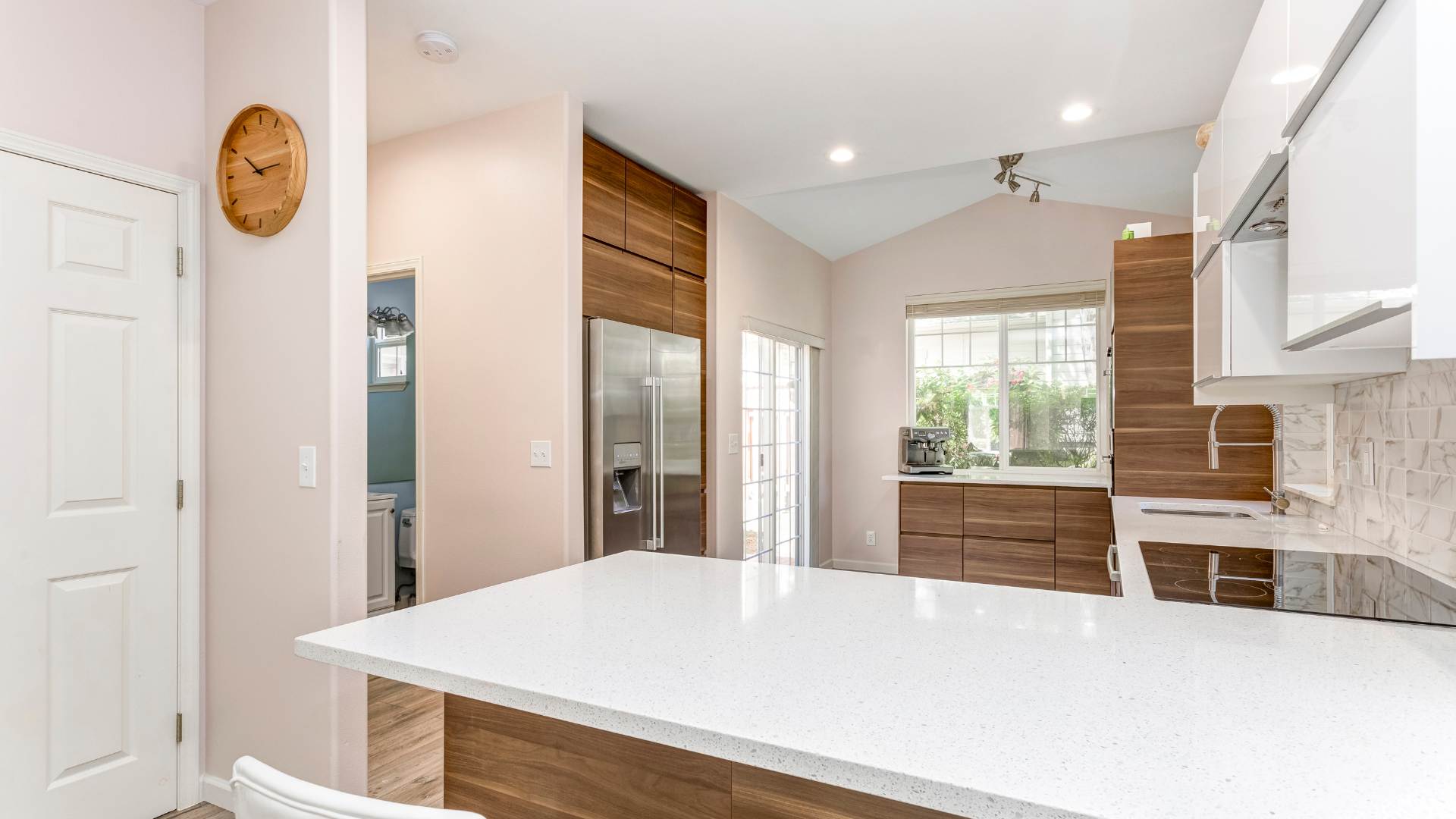
Countertops: Opt for materials like:
- Quartz (for a marble-like look with better durability)
- Recycled glass (eco-friendly and unique)
- Butcher block (warm and functional)
Flooring: Consider:
- Cork (sustainable and comfortable underfoot)
- Bamboo (fast-growing and durable)
- Reclaimed wood (character and eco-credentials)
Backsplashes: Try:
- Natural stone tiles
- Pebble mosaics
- Living walls (more on this later!)
Pro Tip: Mix and match materials for visual interest. A wood island with stone countertops creates a beautiful contrast.
2. Let There Be Light (Natural Light!)
Maximizing natural light is crucial for a biophilic kitchen. Here’s how:
- Install larger windows or skylights if possible
- Use light-filtering window treatments instead of heavy curtains
- Place mirrors strategically to bounce light around the room
- Choose light-coloured finishes to enhance brightness
Budget-Friendly Hack: Can’t add windows? Try “daylight” LED bulbs to mimic natural light.
3. Bring on the Greenery
Plants are the stars of biophilic design. Here are some kitchen-friendly options:
- Herbs: Basil, mint, and rosemary thrive on sunny windowsills
- Air Plants: Low-maintenance and perfect for small spaces
- Snake Plants: Tough, air-purifying, and tolerant of low light
- Pothos: A trailing vine that looks great on shelves
Vertical Garden Idea: Use a modular system or repurposed pallets to create a living wall of herbs or small plants.
4. Incorporate Natural Shapes and Patterns
Biophilic design isn’t just about materials – it’s also about form. Look for:
- Curved countertop edges
- Organic-shaped light fixtures
- Cabinet hardware with nature-inspired motifs
- Textiles with leaf or floral patterns
5. Engage Multiple Senses
A truly immersive biophilic kitchen appeals to all senses:
- Sight: Use earthy colour palettes and varied textures
- Touch: Incorporate tactile materials like rough stone or smooth wood
- Sound: Add a small water feature or wind chimes near a window
- Smell: Grow fragrant herbs or use essential oil diffusers
- Taste: Display fresh fruits and vegetables in beautiful bowls
Practical Tips for Your Biophilic Kitchen Design
You don’t need a complete overhaul to enjoy biophilic benefits. Try these easy starter projects:
- Add a trio of potted herbs to your windowsill
- Replace synthetic dish towels with linen or organic cotton
- Swap out one light fixture for a nature-inspired design
- Use natural cleaners with essential oils for a fresh scent
Budget-Friendly Biophilic Ideas
- Paint an accent wall in a nature-inspired hue
- Create a “living picture” with a frame of succulents
- Use woven baskets for storage and texture
- Display natural objects like pinecones or interesting stones
Sustainable Choices
When selecting materials and products, prioritize sustainability:
- Look for FSC-certified wood products
- Choose low-VOC paints and finishes
- Opt for energy-efficient appliances
- Consider secondhand or vintage items for unique character
Overcoming Common Challenges
- Use hanging planters to save counter space
- Try a magnetic strip for herb pots on the fridge
- Look for multi-functional pieces (e.g., a cutting board that doubles as a planter)
Maintenance Concerns
- Choose low-maintenance plants like ZZ plants or spider plants
- Install self-watering systems for busy households
- Use faux plants in hard-to-reach areas (but mix with real ones!)
Bringing It All Together
Creating a biophilic kitchen is about more than following trends—it’s about crafting a space that truly nurtures you. By thoughtfully incorporating natural elements, you’re not just designing a kitchen; you’re creating an environment that supports your well-being and connects you to the world outside.
Ready to take the next step in your biophilic kitchen design journey? We’re here to help! Our team of experts can guide you through the process, from initial concept to final installation. Whether you have questions about materials, need help with space planning, or want a full custom design, we’ve got you covered.
Book a free consultation with Smart Renovations today, and let’s bring your dream biophilic kitchen design to life!
FAQs
Q: How much does a biophilic kitchen design typically cost?
A: Costs vary widely depending on the scope of your project. Small changes can be cheaper, while a full renovation might range from $20,000 to $50,000 or more. We offer free consultations to provide accurate estimates based on your specific needs.
Q: Can I create a biophilic kitchen if I don’t have natural light?
A: Absolutely! While natural light is ideal, you can still incorporate biophilic elements through materials, plants that thrive in low light, and artificial lighting that mimics natural daylight cycles.
Q: Are there any plants I should avoid in the kitchen?
A: Some plants can be toxic if ingested, so avoid varieties like peace lilies or philodendrons if you have pets or small children. Stick to safe options like herbs, spider plants, or Boston ferns.
Q: How do I maintain a living wall in my kitchen?
A: Living walls require regular watering, proper lighting, and occasional pruning. We can design low-maintenance systems with built-in irrigation and recommend hardy plant species suited to your space.
Q: Will a biophilic kitchen design go out of style?
A: The core principles of biophilic design are timeless, as they’re based on our inherent connection to nature. While specific trends may evolve, a well-designed biophilic kitchen will feel fresh and inviting for years to come.
Q: Can biophilic design work in a modern or minimalist kitchen?
A: Absolutely! Biophilic elements can be incorporated subtly through clean lines, natural materials, and carefully chosen plants. We can help you strike the perfect balance for your aesthetic preferences.
Q: Are there any health benefits to having a biophilic kitchen?
A: Yes! Studies have shown that biophilic environments can reduce stress, improve air quality, enhance cognitive function, and contribute to overall well-being.
Q: How do I choose the right natural materials for my kitchen?
When choosing materials, consider factors such as durability, maintenance requirements, and your overall design aesthetic. We can assist you in weighing the pros and cons of various materials to find the perfect match for your lifestyle and budget.
Remember, we’re here to answer any questions you may have and to help you create the biophilic kitchen of your dreams. Don’t hesitate to reach out and book your consultation today!
We’re right in your backyard with offices in Richmond Hill and Woodbridge.