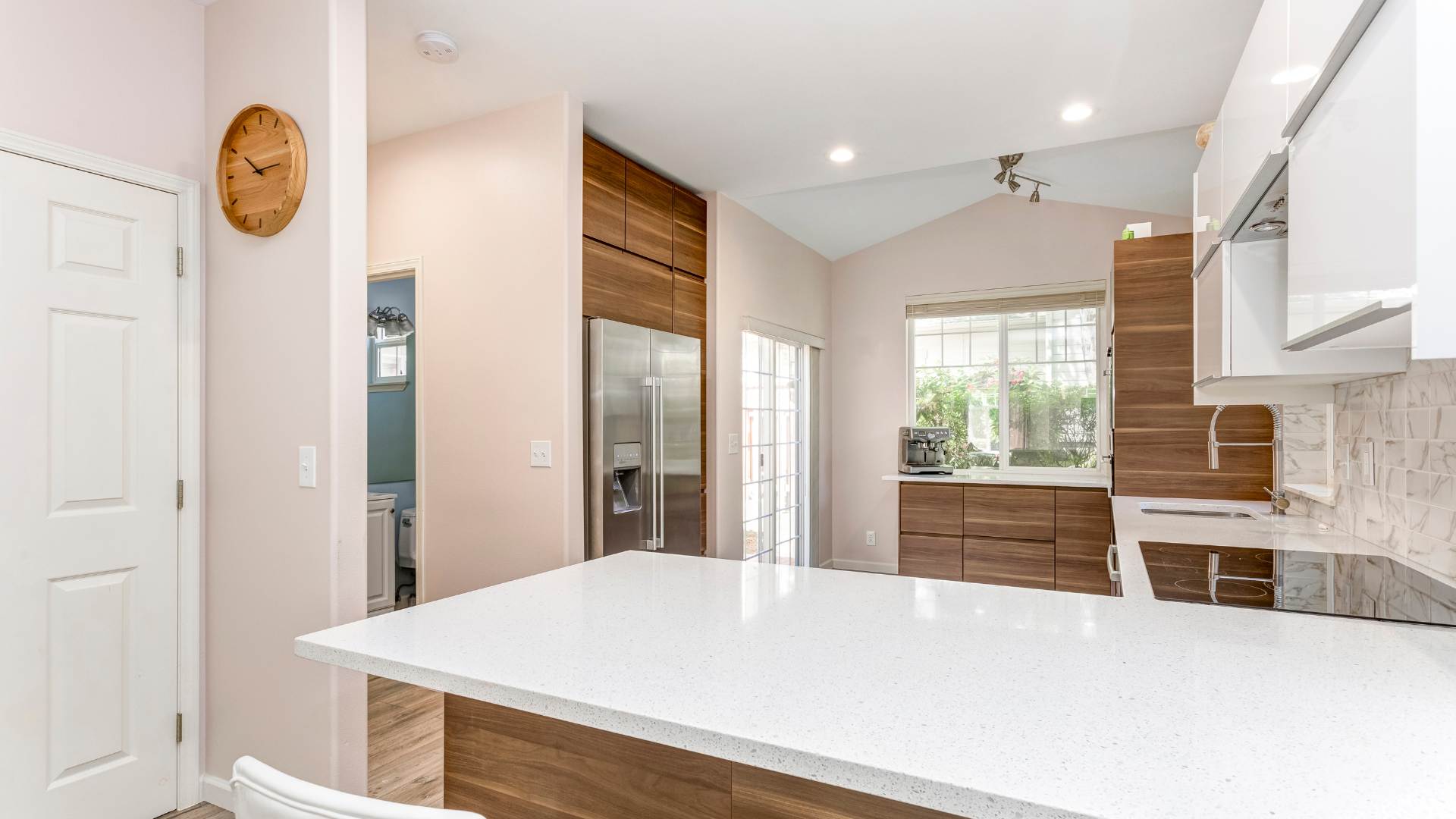

Quick Takeaways
- Kitchen and bathroom renovation materials should be evaluated across five dimensions: durability, maintenance, cost, aesthetics, and appropriateness for the space.
- Material cost and installation cost are not always proportional. Cheap tile can be expensive to install.
- Bathrooms and kitchens have different material demands. What works in one does not always work in the other.
- The most common mistake is choosing materials individually. They need to be chosen as a set.
- Understanding basic spec sheet terms before you go shopping saves time and avoids costly errors.
Kitchen and bathroom renovation materials are where most renovation decisions go wrong. Not the layout. Not the contractor. The materials. Homeowners walk into a showroom, see something they like, and start building the renovation around that one choice. The tile. The countertop. The cabinet colour. It feels like a logical starting point. It usually is not.
The material looks great in the showroom and terrible under the lighting in your actual kitchen. The beautiful natural stone requires sealing every six months and nobody mentioned that. The porcelain tile you loved costs three times as much to install as the price tag suggested because the pattern requires cuts on every piece. The floor material that looks perfect next to the cabinet sample clashes with it once both are in the room together.
This guide is a decision-making framework. Not a product guide. Not a style guide. It teaches you how to evaluate any kitchen and bathroom renovation material before you commit to it, so that by the time you go deep on specific choices, you are asking the right questions.
Jump To a Section

How to Evaluate Kitchen and Bathroom Renovation Materials: The Five Dimensions
Every kitchen and bathroom renovation material decision, whether it is a countertop, floor tile, cabinet finish, or wall cladding, can be evaluated across the same five dimensions. Run any material through this framework before you make a final decision and you will catch most problems before they become expensive ones.
Durability
How long does it last under normal use in this specific space? What actually damages it? Not what the marketing says, but what real wear and tear looks like over five, ten, and twenty years.
The questions to ask: What does impact do to this material? What does prolonged moisture exposure do? How does it handle heat? What does it look like after ten years of normal use, not perfect use?
Some materials age beautifully. Natural hardwood develops patina. Unlacquered brass hardware gets richer. Others age poorly. Certain laminates peel. Some stone etches and stains visibly. Know which category your chosen material falls into before you commit.
Maintenance
What does it take to keep this material looking the way it looks in the showroom? This is where most renovation material decisions go wrong. People evaluate how a material looks when it is new and clean. They do not evaluate how much work it takes to keep it that way.
Maintenance has three components. Cleaning: what products can you use and what will damage it? Sealing: does it need to be sealed, how often, and what happens if you skip it? Refinishing: can the material be brought back if it is worn or damaged, and what does that cost?
Before you leave the showroom, ask directly: how do I clean this? What should I never use on it? Does it need to be sealed and how often? Those three questions will reveal the real maintenance commitment faster than any product description.
Cost: Material Plus Installation
This is a critical distinction that most homeowners miss. Material cost and installation cost are two separate numbers. They are not always proportional. A budget tile at $3 per square foot can cost $18 per square foot to install if the pattern requires cuts on every piece, or if the tile requires a specific substrate preparation. A premium tile at $15 per square foot might install for $10 per square foot because it is large format and straightforward to lay.
When budgeting any renovation material, always get the total installed cost, not just the material price. The installed cost is the only number that matters for your budget.
There are also downstream costs. A material that needs annual sealing has an ongoing cost. A material that cannot be repaired if damaged has a potential full-replacement cost. Factor those into the total picture, not just the day-one price.
Aesthetics: How It Looks and How It Ages
Two separate questions: how does it look now, and how will it look in ten years? A material that looks striking when installed can look dated within five years if it is tied to a specific trend moment. A material that looks understated on installation day can look richer and more refined over time as it develops character.
There is also the question of scale and lighting. A tile that looked perfect in the showroom at 12 by 12 inches can look completely different at full floor scale in your actual room under your actual lighting. Always bring samples home. Always look at them in the real space before ordering.
Ask the supplier: is this a classic choice or is this a trend choice? A good supplier will be honest. If they cannot answer that question, it is a signal to do more research before committing.
Appropriateness for the Space
Not every material that works in one room works in another. Heat, moisture, traffic, and use patterns are different in a kitchen versus a bathroom, a powder room versus a master ensuite, a heavily used family kitchen versus a rarely used formal kitchen.
The question to ask is not just “is this material good?” but “is this material appropriate for the specific conditions of this specific room?” A material rated for residential floor use may not be rated for wet floor use. A finish that holds up in a dry environment may not hold up in a bathroom with daily steam exposure.
Check the manufacturer’s installation guidelines for wet area ratings before purchasing any material going into a bathroom floor, shower, or kitchen area near the sink. This is one of the most important things to verify and one of the most frequently skipped steps.
Pro Tip
Before leaving any showroom with samples, ask the supplier two questions for every material: what damages this, and what is the maintenance routine? If they cannot answer both clearly, look elsewhere. A good supplier knows their products well enough to answer those questions in under a minute.
Kitchen and Bathroom Renovation Materials by Budget: What You Gain and What You Give Up
Across most renovation material categories, there are three price tiers. Each one involves real trade-offs. Here is what those trade-offs typically look like across the main categories.
The Most Useful Budget Principle
Spend your budget on what you cannot easily change later. Cabinetry and countertops are expensive to replace. Hardware and paint are not. If you have to make trade-offs, make them on the elements that are easiest to update in the future.
How Kitchen and Bathroom Material Demands Differ
Kitchens and bathrooms are both high-demand renovation spaces but they are demanding in different ways. A material that handles one room perfectly may fail in the other. Understanding the difference changes which materials you consider.
Pro Tip
When specifying any tile for a bathroom floor, confirm two ratings before you buy: the PEI rating (how it handles foot traffic) and the COF rating (how slip-resistant it is when wet). A tile that passes one but not the other is not the right tile for a bathroom floor. Most suppliers can look these up immediately if the tile does not have them on the label.
Common Renovation Material Selection Mistakes
These are the mistakes that show up in renovation projects across the GTA consistently. Most of them are avoidable if you know to look for them before the order is placed, not after.
Choosing Based on Looks Without Asking About Maintenance
This is the single most common material mistake. A surface looks beautiful in a showroom under controlled lighting. Nobody mentions that it needs sealing every year, or that it etches on contact with lemon juice, or that the grout lines require weekly scrubbing to stay white.
The fix is simple. Before you fall in love with any material, ask the supplier the maintenance question directly. Not “is it easy to maintain?” but “what do I have to do to maintain it, and how often?” Those are different questions and the second one gets a much more useful answer.
Not Asking About Installation Requirements
Every material has installation requirements. Some require specific substrate preparation. Some require specialised trades. Some take twice as long to install as a comparable material because of the pattern or the format. All of these factors affect cost and timeline.
Before you order any material, show the product spec sheet to your contractor and ask: are there any installation requirements for this that would change the cost or timeline? That five-minute conversation can surface surprises that would otherwise show up as change orders after work has started.
Mixing Materials That Look Good Separately but Clash Together
Every material in a room needs to work with every other material in the room. A warm-toned floor tile and a cool-toned cabinet finish are both individually attractive. Together, they fight each other in a way that makes the whole room feel unresolved.
The issue is most often undertone. Warm versus cool tones across different materials is the most common source of clashing. The fix is to evaluate all your material samples together, in the actual room, under the actual lighting, before you finalise any order. More on this in the coordinating materials section below.
Using Dry-Room Materials in Wet Areas
Standard drywall behind a tub surround. Non-porcelain ceramic on a shower floor. Unsealed natural stone in a wet area. These are materials that will fail when exposed to sustained moisture. Not might fail. Will fail. The question is only how quickly.
Always confirm wet-area ratings before purchasing any material going into a bathroom. The specification should be stated on the product or available from the supplier. If a supplier cannot confirm wet-area suitability for a product you intend to use in a wet area, do not use that product.
How to Read a Product Spec Sheet
Product spec sheets contain the information that actually determines whether a material is right for your project. Most homeowners skip them. The terms look technical and the format is not designed for casual reading. But you only need to understand a handful of key terms to get significant value from a spec sheet.
Pro Tip
You do not need to understand every term on a spec sheet. You need to know which terms matter for your specific application and check those. For a bathroom floor tile: PEI rating and COF rating. For a wet-area wall tile: water absorption percentage. For a countertop stone: hardness rating and maintenance requirements. Focus your spec sheet review on those specific numbers and you will catch the most important issues quickly.
How to Coordinate Materials Across a Space
Materials need to be chosen as a set, not individually. This is one of the most practically important things to understand about renovation material selection, and it is the step most homeowners skip.
Every material in a room is in visual relationship with every other material. The floor is always visible alongside the cabinet. The countertop is always seen next to the backsplash tile. When those relationships are not considered, the room can look assembled rather than designed, even if every individual material is high quality.
One Thing Worth Remembering
Material selection is one of the most consequential decisions in a renovation and one of the most rushed. The materials you choose will be in your home for fifteen to twenty years. Spending an extra few weeks in the selection process, getting samples, checking spec sheets, and evaluating everything together in the real space, is not slow. It is the right pace for a decision of this scale.
Frequently Asked Questions
What is the most important thing to check before buying renovation materials?
Confirm two things before any purchase. First, whether the material is appropriate for the specific conditions of the space it is going into, particularly for wet areas. Second, what the real maintenance commitment is. Both questions are fast to ask and the answers reveal most of the problems that show up after installation.
Why is material cost different from installation cost?
Material cost is what you pay for the product. Installation cost is what the contractor charges to install it, which depends on complexity, the preparation required, and how long it takes. A simple large-format tile installs faster than a complex mosaic pattern even if the tile itself costs more. Always get the total installed cost when comparing materials, not just the product price.
What is a PEI rating and why does it matter for tile selection?
PEI stands for Porcelain Enamel Institute. The rating, from 0 to 5, measures how well a tile handles foot traffic before showing visible wear. Tiles rated PEI 0 to 2 are for walls only. Residential floors need at least PEI 3. High-traffic areas benefit from PEI 4 or higher. Using a wall tile on a floor is a common mistake that results in visible surface wear within a few years.
What is the COF rating for bathroom floor tile?
COF stands for Coefficient of Friction. It measures how slip-resistant a tile surface is when wet. Building code in most Canadian jurisdictions requires a COF of 0.60 or higher for bathroom floor tile. Below 0.42 is considered a slip hazard in wet conditions. This is a non-negotiable specification check for any bathroom floor tile purchase.
Can I use the same materials in my kitchen and bathroom?
Sometimes, but not automatically. Kitchens and bathrooms have different demands. Bathroom floors need slip resistance ratings that kitchen floors do not. Bathroom wall areas near the tub and shower need waterproof substrates and wet-area rated tile. A material that works perfectly in a kitchen may not meet the wet-area requirements of a bathroom. Check both applications separately against the spec sheet.
What does VOC content mean in renovation finishes?
VOC stands for Volatile Organic Compounds. They are chemicals released into the air by paints, adhesives, sealers, and cabinet finishes during and after application. High VOC content can affect indoor air quality, particularly in enclosed spaces. Low-VOC formulations are widely available across all price points and are a good default choice, especially in homes with children or anyone with respiratory sensitivities.
How do I know if materials will work together in the same room?
Get physical samples of every material you are considering and look at them together in the actual room under the actual lighting at different times of day. The most common coordination problem is mismatched undertones, warm-toned materials mixed with cool-toned ones without intention. Evaluating samples together in the space catches this before you commit to an order.
What is the difference between water-resistant and waterproof materials?
Water-resistant materials can handle brief or occasional moisture exposure without damage. Waterproof materials can handle sustained or direct water contact. For bathroom wet areas, shower walls, tub surrounds, and bathroom floors, waterproof is the correct standard. Water-resistant is not sufficient for these applications. Standard drywall is neither water-resistant nor waterproof and should never be used behind tile in wet areas.
What renovation materials offer the best value at mid-range price points?
In the GTA renovation market, engineered quartz countertops, porcelain tile for floors and walls, semi-custom cabinetry, and luxury vinyl plank flooring consistently deliver strong performance relative to cost at the mid-range. They are durable, low maintenance, and widely available in formats and finishes that work across a range of design styles. They are the choices that experienced contractors most commonly recommend when homeowners want quality without the premium tier price.
When should I involve my contractor in material selection?
Before you finalise any order. Once you have narrowed down your choices to two or three options, share the product spec sheets with your contractor and ask if there are any installation implications you should know about. This conversation takes minutes and can surface issues that would otherwise appear as change orders after work has started. A good contractor will flag installation complexity, substrate requirements, and anything about the product that changes the scope or cost of the work.
Visit Us to See Kitchen and Bathroom Renovation Materials in Person
Samples look different in person than they do on a screen. We work with GTA homeowners from two locations and encourage you to come in and see materials side by side before making any decisions. You can also browse completed renovation projects on Houzz.
Richmond Hill Office 10815 Bathurst St, Unit 5
| Woodbridge Office 8A, 40 Innovation Dr
|
Not Sure Which Materials Are Right for Your Project?
Our team works with GTA homeowners through every material decision, from the first sample to the final order. Get a free quote or reach out to start the conversation.